
If your home is not on mains drainage, the general binding rules decide whether your septic tank or treatment plant is legal. Here is what they mean in practice.
Plenty of Lincolnshire homes are not connected to a public sewer. Villages in the Wolds, farmhouses in the Fens and properties along the coast often rely on a septic tank or a small sewage treatment plant. In England, these systems are regulated by the Environment Agency through a set of conditions called the general binding rules. If your system meets the rules, you do not need an environmental permit. If it does not, you either need to improve it or apply for a permit.
The rules are published in full on GOV.UK, in separate guidance for discharges to the ground and discharges to surface water. This page summarises the main points for a typical household.
Septic tank or treatment plant?
The distinction matters, because the rules treat them differently.
- A septic tank is a simple underground tank where solids settle and the liquid flows out, usually into a drainage field (also called an infiltration system or soakaway) where it filters through the soil.
- A small sewage treatment plant (often called a package treatment plant) uses mechanical parts, usually an electric pump or aerator, to treat the waste to a higher standard before it is released.
If you are not sure which you have, an older concrete or brick chamber with no power supply is usually a septic tank; anything with an electrical connection and an alarm is usually a treatment plant.
The key rule: no septic tanks straight into water
The change most people have heard about is this: a septic tank must not discharge directly into surface water, meaning a river, stream, ditch or drain. Under the rules, owners of septic tanks discharging to surface water had to replace or upgrade them by 1 January 2020, or sooner if the property was sold. The usual options are:
- connect to the public sewer, where one is available;
- install a drainage field so the tank discharges to the ground instead;
- replace the septic tank with a small sewage treatment plant, which may discharge to surface water;
- in some cases, fit a conversion unit that turns the septic tank into a treatment plant.
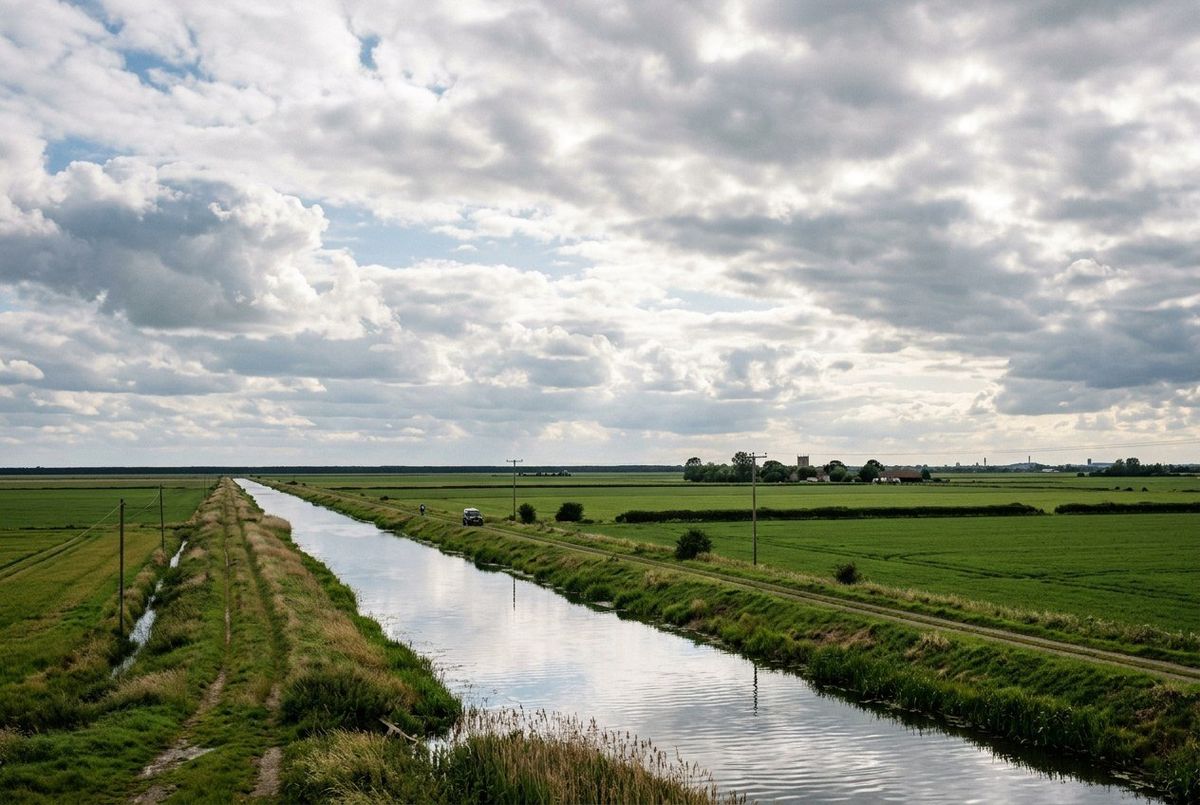
In the Fens, where dykes and drains run past almost every property and the water table is high, this rule affects a great many homes. A drainage field may not work in waterlogged ground, which is why treatment plants are common in the area.
Discharges to the ground
For a septic tank or treatment plant that discharges to the ground through a drainage field, the main conditions include:
- the discharge must be no more than 2 cubic metres (2,000 litres) a day;
- it must be domestic sewage only;
- it must go through a drainage field that meets the relevant British Standard, not a soakaway pit or a borehole;
- it must not be in a groundwater source protection zone 1, and must be at least 50 metres from a well, spring or borehole used for drinking water;
- the system must be properly installed, used and maintained.
Discharges to surface water
Only a treatment plant may discharge to surface water under the rules. The discharge must be no more than 5 cubic metres a day, and the plant must meet the relevant standard. There are further conditions about the watercourse itself, for example it must normally have flowing water throughout the year.
Emptying and maintenance
Every system needs regular attention. The rules require that you:
- have the tank or plant emptied (desludged) regularly, by a registered waste carrier, following the manufacturer's instructions where there are any;
- have it maintained by someone competent, and keep records of maintenance and emptying;
- fix problems promptly, such as pooling or smells over the drainage field, blockages or alarms on a treatment plant.
You can check that a company is a registered waste carrier on the Environment Agency's public register. If an unregistered operator fly-tips your sludge, you can be held responsible.
New systems
Installing a new septic tank or treatment plant is building work and needs building regulations approval, and sometimes planning permission. For a new discharge, the rules also say that you must connect to the public sewer if it is reasonably close: the guidance sets a distance based on the number of properties, starting at 30 metres for a single home. See building notice vs full plans for how building control approval works.
Selling a property with a septic tank
If you sell, you must tell the buyer in writing that the property has a sewage system, what kind it is, and provide a description of the system, its location and its maintenance requirements. Expect buyers' surveyors and solicitors to ask whether it meets the general binding rules. Having emptying receipts and maintenance records ready makes this much easier.
If you cannot meet the rules
If your system cannot meet the general binding rules, you will need to apply to the Environment Agency for an environmental permit, or change the system so that it does comply. Start with the GOV.UK guidance, and speak to a drainage engineer about the options for your site.
For other rural home issues, from oil heating to hard water and flood risk, see rural and off-grid and the oil tank regulations guide.