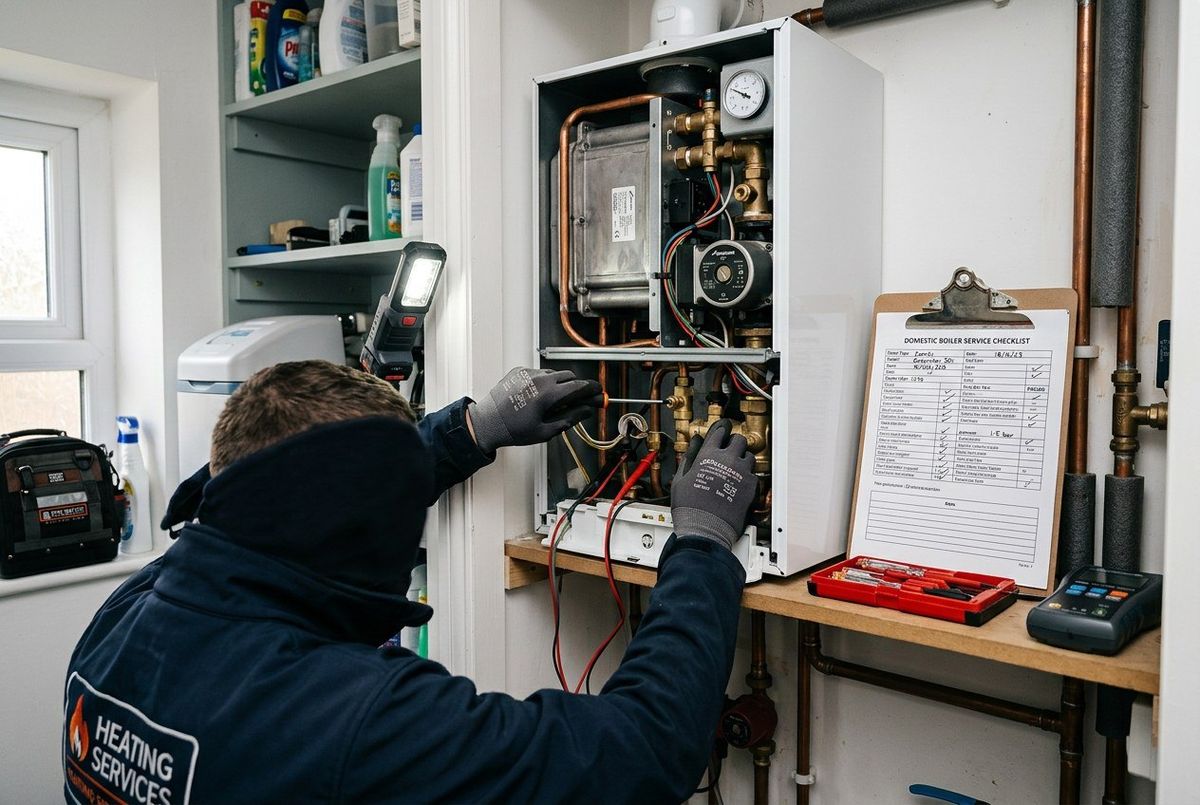
Anyone who works on gas in your home must be on the Gas Safe Register. Checking takes two minutes and is the most important check you will make on any tradesperson.
Gas work is one of the few areas of home maintenance where the law is completely clear. Under the Gas Safety (Installation and Use) Regulations 1998, anyone carrying out work on gas appliances, fittings or pipework in a home must be registered with the Gas Safe Register. That covers boilers, gas fires, cookers and hobs, and the pipework that feeds them, whether the gas is mains natural gas or LPG. It does not matter how small the job is: fitting a gas cooker or moving a gas pipe a few centimetres both count.
The Gas Safe Register replaced CORGI in 2009. If someone tells you they are "CORGI registered", that is out of date by well over a decade, and it is a reason to check them carefully.
Step 1: ask for the ID card
Every registered engineer carries a Gas Safe ID card. A genuine engineer will show it without hesitation, and you are entitled to ask before they start. On the front you should see:
- the engineer's photograph and name;
- their personal licence number;
- the name and registration number of the business they work for;
- start and expiry dates.
The back of the card is the part most people skip, and it matters most. It lists the types of gas work the engineer is qualified to do. An engineer qualified for domestic natural gas boilers is not automatically qualified for LPG, for gas fires, or for commercial catering equipment. Check that the work you need is listed.
Step 2: check the register
The card is a good start, but the register is the definitive record. You can search it on the Gas Safe Register website using the engineer's licence number or the business name and postcode. The result should match the card, confirm the registration is current and show the same categories of work. If the register and the card disagree, do not let the work go ahead.
It is worth doing this before the day of the job, when you are choosing between quotes, rather than with an engineer standing on the doorstep.
LPG and off-grid homes in Lincolnshire
Large parts of rural Lincolnshire are off the mains gas network. Homes there usually heat with oil, LPG, electricity or solid fuel. If your home uses LPG, from a bulk tank in the garden or bottles, the same law applies: the engineer must be Gas Safe registered and qualified for LPG work. Look for LPG on the back of the card.
Oil is different. Oil-fired boilers and tanks are not gas, so Gas Safe registration does not apply. The relevant scheme is OFTEC, and the rules for oil storage are covered in the oil tank regulations guide.
What you should receive after the job
The paperwork depends on the work.
- A new or replacement boiler. This is notifiable building work. A registered business notifies the work through Gas Safe Register, and you should then receive a Building Regulations Compliance Certificate. Keep it: buyers' solicitors ask for it when you sell.
- A service or repair. Ask for a written record of what was checked and done. A good engineer will note the appliance, any readings taken and any faults found.
- A warranty registration for a new boiler, if the manufacturer requires one. This is separate from the legal certificate.
Warning notices: "At Risk" and "Immediately Dangerous"
If an engineer finds an unsafe appliance, they follow an industry procedure for unsafe situations. An appliance may be classed as At Risk, meaning it should not be used until it is repaired, or Immediately Dangerous, in which case the engineer will, with your permission, disconnect it. They should explain the problem and leave a written warning notice. Take these seriously, and if in doubt ask a second registered engineer to inspect it.
If you rent out a property
Landlords have specific legal duties for gas. Gas appliances, fittings and flues provided for tenants must be checked for safety by a Gas Safe registered engineer every year. A copy of the gas safety record must be given to existing tenants within 28 days of the check, and to new tenants before they move in, and records must be kept for at least two years. The Health and Safety Executive explains these duties in its gas safety guidance.
In England, landlords must also fit a carbon monoxide alarm in any room used as living accommodation that contains a fixed combustion appliance, other than a gas cooker. Many homeowners fit them too, and it is sensible advice for any home with gas, oil or solid fuel heating.
Signs something is wrong
Be cautious if someone:
- cannot or will not show an ID card;
- offers a card that does not match the register;
- says registration is "not needed for a small job";
- asks for full payment in cash before starting;
- uses CORGI branding or talks about being "CORGI approved".
You can report suspected illegal gas work to the Gas Safe Register. If you ever smell gas, or suspect carbon monoxide, leave the property, open doors and windows if it is safe to do so, and call the National Gas Emergency Service on 0800 111 999.
Checking other trades
Gas is the strictest case, but similar checks apply to electricians, window fitters and heating engineers through competent person schemes. The checks and credentials page explains which schemes are legal requirements and which are voluntary, and the hiring a tradesperson guide covers quotes, insurance and payment.